
How Gowning Room Furniture Controls Entry Protocols?
When you manage a cleanroom facility, you know that contamination rarely starts inside the critical space. It usually begins at the entrance. That’s why your gowning area is more than a transition zone—it’s the control point that determines whether your cleanroom maintains its classification or struggles with preventable particle issues. The right gowning room setup helps you enforce discipline, standardize behavior, and protect sensitive processes from day one.
Why Entry Protocols Depend on Physical Design
You can create detailed SOPs and train your team thoroughly, but if your gowning room layout is poorly designed, compliance will slip. People take shortcuts when the environment allows it. Strategic placement of benches, storage units, and garment dispensers guides movement in a controlled, logical sequence.
When you invest in purpose-built modular gowning room furniture for cleanroom entry control, you create a physical workflow that supports your written protocols. Instead of relying only on reminders and supervision, your facility layout reinforces correct behavior naturally.
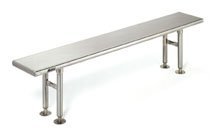
For example, a clearly divided “dirty-to-clean” bench system ensures personnel sit on one side to remove street shoes and swing their legs over to the clean side before putting on cleanroom footwear. This simple structural feature eliminates cross-contamination risks at the threshold.
You Establish Clear Separation Between Zones
Effective entry control begins with separation. Your gowning room should clearly define:
- Uncontrolled area (outer zone)
- Transition zone
- Clean side (pre-cleanroom entry)
Specialized storage cabinets, step-over benches, and garment racks create visual and functional boundaries. Without this separation, employees may unknowingly move between zones without completing gowning procedures properly.
High-quality solutions from CleaTech LLC cleanroom furniture manufacturer are engineered to support zoning strategies. Stainless steel frames, smooth surfaces, and easy-to-clean finishes prevent particle buildup while maintaining structural integrity under daily use.
When furniture supports zoning, your entry protocols become intuitive rather than forced.
You Standardize the Gowning Sequence
Every cleanroom requires a defined gowning sequence—hair cover, beard cover (if needed), shoe covers, coveralls, gloves, and goggles. The problem arises when supplies are scattered or poorly organized. Workers may skip steps or don garments out of order.
Dedicated garment dispensers and organized shelving help you control this sequence. When each item is positioned according to your SOP flow, personnel naturally follow the correct order.
Wall-mounted storage systems and integrated glove dispensers reduce unnecessary movement. This prevents turbulence, which can stir up particles. You are not just organizing supplies; you are controlling airflow behavior and minimizing contamination risks.
You Reduce Human Error Through Ergonomic Design
Fatigue and discomfort increase mistakes. If your staff struggles to balance while putting on shoe covers or reaches awkwardly for garments, compliance decreases over time.
Ergonomic gowning benches with stable support allow personnel to gown safely and efficiently. Rounded edges and smooth welds reduce garment snagging. Adequate spacing prevents overcrowding during shift changes.
When you design for comfort and efficiency, you reduce the temptation to rush. This is how furniture directly influences behavioral compliance.
You Improve Traffic Flow and Prevent Bottlenecks
Entry bottlenecks often lead to rushed gowning and incomplete procedures. If your gowning room is undersized or poorly arranged, employees may feel pressure during peak shifts.
Strategic placement of benches and lockers creates a one-directional flow. Personnel move forward step-by-step without backtracking. This reduces cross-traffic and airborne disturbance.
Modular configurations allow you to scale as your operation grows. Whether you manage pharmaceutical production, semiconductor fabrication, or medical device assembly, adaptable furniture ensures your gowning room evolves with operational demand.
You Support Cleanability and Maintenance
Your entry protocols are only effective if the gowning environment remains clean. Furniture made from powder-coated steel or stainless steel with smooth, non-porous surfaces resists corrosion and simplifies sanitation.
Open-frame designs minimize hidden particle traps. Raised legs allow easy floor cleaning underneath units. These design details directly support your environmental monitoring standards.
By selecting durable, contamination-resistant materials, you reduce long-term maintenance costs while maintaining compliance with ISO classifications.
You Reinforce Accountability and Professionalism
A well-designed gowning room sends a clear message: contamination control is non-negotiable. When employees walk into a structured, organized, and professional environment, they are more likely to take procedures seriously.
Clean, purpose-built furniture creates psychological reinforcement. It signals that protocols matter and that every step is part of a larger quality commitment.
If you want to upgrade your facility layout or implement a new cleanroom entry system, you can contact us today for customized gowning room solutions tailored to your operational needs.
You Enhance Regulatory Compliance
Industries such as pharmaceuticals, biotechnology, aerospace, and microelectronics must comply with strict contamination control standards. Auditors frequently evaluate gowning procedures and entry layouts.
When your furniture supports defined entry protocols, you can demonstrate clear zoning, structured workflow, and contamination prevention strategies. This reduces audit stress and strengthens documentation.
Your gowning room becomes measurable proof of compliance rather than a weak point during inspections.
You Build a Long-Term Contamination Control Strategy
Gowning room furniture is not a decorative investment. It is infrastructure. Every bench, cabinet, and storage system contributes to your contamination control strategy.
When you align your furniture selection with your SOPs, staff training, and airflow design, you create a cohesive entry control system. Over time, this reduces particle counts, improves yield, and minimizes costly rework.
The result is operational efficiency supported by physical design—not just written rules.
FAQs About Gowning Room Furniture
Why is gowning room furniture important in cleanrooms?
Gowning room furniture controls personnel movement, supports zoning, and reinforces proper gowning sequences. It reduces contamination risk by guiding employees through structured entry protocols.
What materials are best for gowning room furniture?
Stainless steel and powder-coated steel are ideal due to durability, corrosion resistance, and ease of cleaning. Smooth, non-porous surfaces prevent particle accumulation.
How does step-over bench design improve contamination control?
Step-over benches create a physical barrier between dirty and clean zones. This prevents footwear cross-contamination and ensures personnel follow proper transition procedures.
Can gowning room furniture be customized?
Yes. Modular designs allow customization based on room size, cleanroom classification, and workflow requirements.
How often should gowning room furniture be cleaned?
Cleaning frequency depends on cleanroom classification and operational intensity. However, regular daily cleaning and scheduled deep sanitization are recommended to maintain compliance.







0 Comments